
DDS TorqueSync™ Founders Edition
DDS TorqueSync™ Founders Edition
Direct-Drive Wheelbase
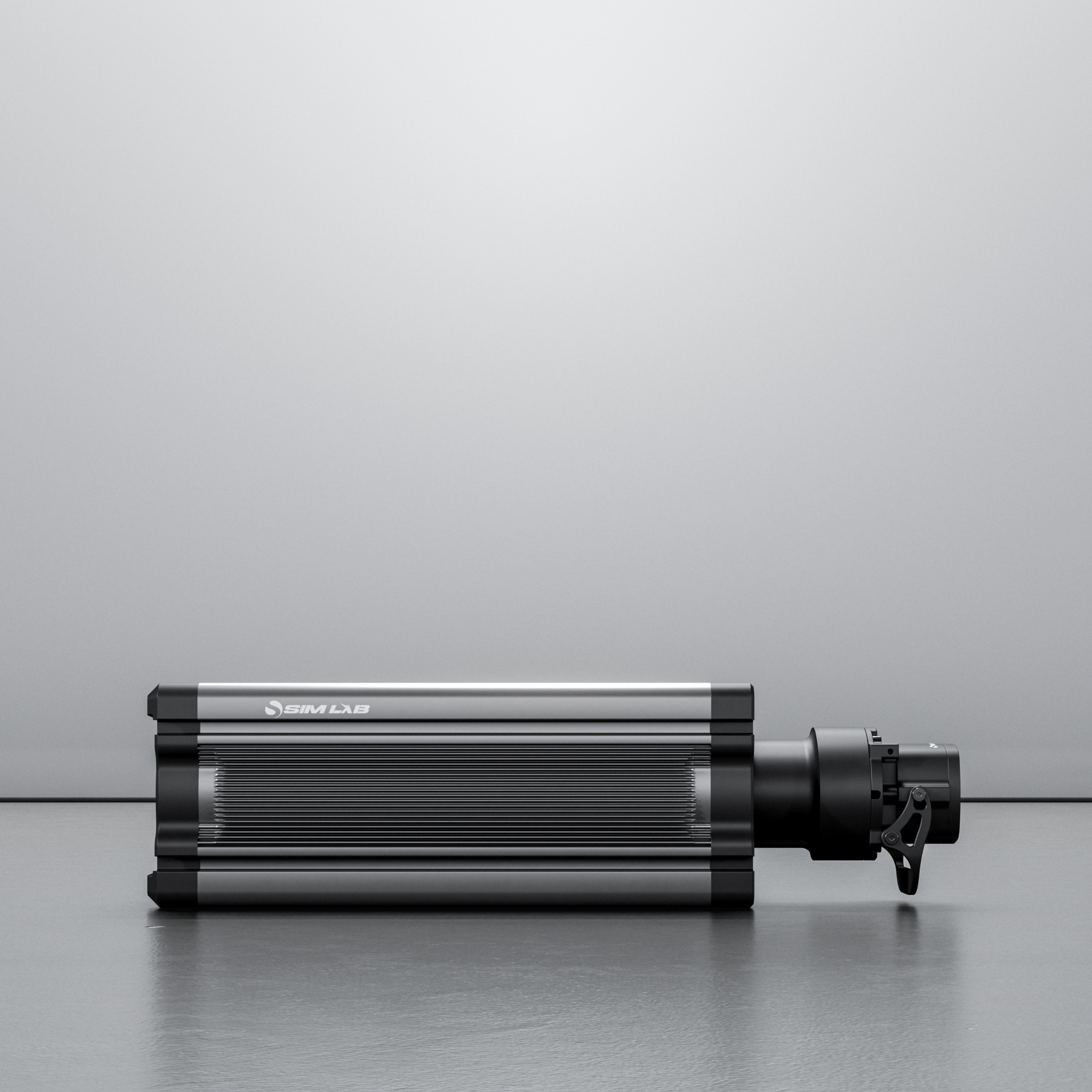
The DDS TorqueSync™ Direct-Drive Wheelbase is a no-compromise force-feedback system built on industrial motorsport technology. Developed with SOLO Motorcontrollers, it combines a 350V servo architecture, 100 kHz control loop, and patented signal processing to deliver torque response that's faster, cleaner, and more precise than anything in sim racing.
Available in DDS26 (26 Nm) and DDS39 (39 Nm), both variants share the same uncompromising engineering and performance.
Founders Edition: Each unit features a Founders Edition engraving with a unique serial number. It also includes our new Xero-Play Quick Release V2 and a premium collector’s booklet.
- TorqueSync™ patented technology
- Open Eco-System USB-Data Passthrough
- Industrial-grade servo motor with 350V architecture
- Advanced FFB tweaking and Telemetry FFB included
Couldn't load pickup availability

Product Warranty
Product Warranty



Industrial-grade motor control meets 350V power delivery.
Voltage Makes the Difference

Full USB connectivity designed for today's wheels and tomorrow's innovations.
Future-Proof Data Passthrough

Patented technology synchronizes simulator physics with motor output in real time.
Feel What Others Miss

No external brick, full power delivery built into the base.
No Brick, No Clutter

Universal mounting and open ecosystem. No compromises, no lock-ins.
Designed to Adapt

RaceDirector™ gives you control, telemetry, and a community of setups.
Software That Thinks Like You Do
DDS TorqueSync™ Specifications
DDS TorqueSync™ Compatibility & Box Contents
Frequently Asked Questions
Product Overview
Why did Sim-Lab decide to create its own Direct Drive wheelbase?
Just the possibility to run a 100% Sim-Lab setup was enough. One ecosystem, one design language, one support line. The DDS TorqueSync™ drops straight into our rigs, mounts line up, cable management is clean, and every bracket, shifter plate, pedal mount, and screen stand plays nicely together. No guesswork on fitment, no adapters, no compromises on rigidity. It looks cohesive, it feels rock solid, and it’s built to grow with you as you add wheels, button boxes, or flight gear. For a lot of customers, that level of integration and reliability is the whole point.
What makes this Direct Drive different from anything else on the market?
3 years ago we started exploring Direct Drive wheelbases. A little over a year back we met SOLO Motorcontrollers SRL, an Italian team specialized in motor control. From that moment things shifted into fifth gear. It turned out to be a perfect fit. We had the freedom to design a no-compromise DD wheelbase with zero legacy holding us back and the best components and features available. That journey became the DDS TorqueSync™ Wheelbase. On paper and in real life, it is the best wheelbase we could build.
Who is it made for - pros, enthusiasts, or both?
The DDS TorqueSync™ wheelbase is built for drivers who want the very best. Our core model, the DDS TorqueSync™26, hits the sweet spot for real-world power with 26 Nm of clean, controllable torque that covers everything from GT to open wheel. With native USB data passthrough and an open ecosystem, your setup stays compatible as wheels and accessories evolve.
What experience can a driver expect when using it?
Expect a natural, smooth, and powerful FFB. The car feels planted with real weight in your hands, giving you confident, controllable steering through every corner. Subtle detail when you need it, solid authority when you lean on the tires.
Technology & Performance
What is TorqueSync™, and how does it improve force feedback detail and response?
TorqueSync™ is our patented signal translation technology that ensures torque output is perfectly aligned with the game’s physics engine. It synchronizes every update from the simulation with the servo drive at up and over 100,000 times per second, eliminating the “delay”. The result is immediate, lifelike torque response: when you lose traction or clip a kerb, DDS TorqueSync™ translates it to the motor instantly and with exact proportionality. It’s what makes the wheel feel alive, not mechanical.
What is an encoder?
An encoder is a sensor that measures the position, speed, and sometimes direction of a motor shaft. In Direct Drive wheelbases, the encoder allows the motor controller to know exactly where the wheel is at all times, which is essential for precise force feedback. High-resolution encoders (often optical or magnetic) ensure that micro-movements, vibrations, and road textures are accurately translated to your hands in real time.
What is an inner runner motor?
An inner runner motor, also called an internal rotor motor, has the rotor located inside the stator. This contrasts with an outer rotor design, where the rotor spins around the outside. Inner runner motors are generally smaller, lighter, and have lower rotational inertia, allowing for faster torque response, less vibration, and smoother control: ideal for sim racing.
What is Peak Torque?
Peak torque is the maximum rotational force a motor can produce for a long time, usually during sudden events like hitting a kerb, oversteer, or rapid steering corrections. It gives the wheelbase the ability to feel extreme events in the simulation.
What is slew rate?
Slew rate on a direct-drive wheelbase is how fast the motor can change torque. Think of it as the “torque acceleration.” If the game asks for a sudden jump from light force to heavy force, a higher slew rate lets the base ramp to that new torque almost instantly, which makes kerbs, jolts, micro-detail and counter-steer cues feel sharp and lifelike instead of mushy. Slew rate is measured in Nm/ms (Newton meter / millisecond).
What is a slipring?
A slipring is a component that allows continuous electrical power and data to pass between stationary and rotating parts. In this case, from the wheelbase to the quick-release and wheel rim. Replaceable sliprings in DDS TorqueSync™ ensure long-term reliability, easy maintenance, and support for displays, LEDs, and telemetry modules. Slip rings are widely used in medical devices as well as a host of other critical industrial applications.
What is Front mount capability?
Front mount capability means the wheelbase can directly attach to the front of compatible sim racing cockpits without adapters. These adapters are widely used. This allows for maximum rigidity, correct ergonomics, and easier cable routing. It ensures that the base feels solid under high torque and fits common setups seamlessly.
What is DSP motor-controller chip?
The DDS TorqueSync™ uses a multi-core DSP chip which makes it possible to run multiple high-rate control tasks in parallel: a 100 kHz torque loop, advanced filtering and sensor fusion, real-time safety and thermal management, and predictive feed-forward control, all with deterministic timing and ultra-low latency. The result is cleaner detail, higher slew rate, and extra headroom for future features without compromising feel.
What is mosfet?
MOSFET stands for Metal-Oxide-Semiconductor Field-Effect Transistor. It is an electronic switch inside the motor driver that regulates current to the motor phases. High-quality MOSFETs can handle more current, switch faster, and generate less heat, which directly affects torque delivery and efficiency. It runs at a lower refresh rate as the motorcontroller DSP chip.
What is N.m? (Newton meter)
Newton meter (N·m) is the unit of torque, which measures rotational force. 1 N·m is the torque produced when a 1-newton force acts at a 1-meter distance from the pivot. In wheelbases, higher N·m means stronger resistance and more realistic force feedback.
Why do we use a 350 V architecture with a 1500 W PSU instead of a 48 V system with a smaller PSU?
Voltage defines speed capability and response, current defines torque. Our drive runs a 350 VDC internal bus and delivers up to 24 A phase current for 26 Nm at the shaft, while drawing about 14 A (peak) from US mains. At higher instantaneous speeds, the motor generates back-EMF, which rises with rpm. A controller can only push current if its bus voltage sits above that back-EMF. With a 48 V system you can achieve high torque at low speed by using a lot of current, but you run out of voltage headroom sooner as back-EMF approaches the supply, so torque falls off at speed and torque transitions slow down. With a 350 V bus there is enough headroom to overcome back-EMF, keep torque available over a wider speed range, and achieve a higher torque slew rate, which translates to sharper, more lifelike force feedback.
In sim racing you rarely spin the motor fast continuously, but you do see rapid direction changes and short velocity spikes when catching slides, hitting curbs, or recentring. Those moments are where voltage headroom matters most, because the drive must push or pull current instantly. That is why we pair the high-voltage architecture with a 1500 W PSU, not to waste power, but to ensure the energy reserve and voltage margin needed for instant torque delivery.
End of the day it is a trade-off. A 48 V approach favours high current at low speed with a smaller PSU, while our 350 V approach favours sustained torque at speed and faster transients with a larger PSU. Different design choices, different performance envelopes.
What does “market-leading slew rate” actually mean in real driving terms?
“Slew rate” is how fast the wheelbase can change torque and direction. DDS TorqueSync™ is class-leading here, so when you countersteer or hit a kerb it can apply or reverse torque almost instantly. In practice it feels like your reactions got sharper, because the wheel keeps up with every sudden input and track detail. You catch slides earlier, place the car with more confidence, and the steering feels natural rather than forced.
This speed comes from the foundation: a 350 V DC internal bus that delivers power without sag, a multi-core DSP running a 100 kHz torque loop, and a low-latency control path from game signal to motor. High voltage means lower current for the same power, which reduces losses and lets torque rise fast and clean.
How does the harmonically balanced engine affect smoothness and feel?
Harmonic balancing reduces torque ripple at the source and in control, so torque stays consistent as the rotor turns. We use flux-shaping and pole-slot choices to lower cogging and slotting effects, then keep currents clean with field-oriented control and ample voltage headroom. With a fast torque loop and high-resolution encoder, commutation and quantization artifacts are minimized. The result is a flatter torque-versus-angle profile and cleaner transients, which translates to a smoother, more continuous on-center feel without masking useful road and tire detail.
Why is 26 Nm (or 39 Nm) true holding torque important for long races?
True holding torque refers to the wheelbase’s ability to sustain its rated torque indefinitely without overheating or dropping performance. Many systems reduce torque output under thermal stress, but DDS TorqueSync™’s 26 Nm and 39 Nm models maintain full power for as long as you drive. This consistency is vital for endurance racing. Force feedback stays exactly the same from lap one to lap 300, ensuring total trust in what you feel from the tyres.
Why did we choose to integrate the PSU instead of using an external power brick?
At the power levels required for our system, there are simply no suitable off-the-shelf external power bricks available. Typical consumer-grade units top out around 500-600 W, while our drive operates on a 1500 W, 350 V internal supply. The only external options that could handle this are industrial-grade units, which are bulky, noisy, and extremely costly-far from ideal for a consumer sim racing product.
By integrating the PSU, we keep the design compact, efficient, and safe. It allows for optimized thermal management, shorter power paths, and direct control over quality and protection features. The result is a cleaner setup with a single mains cable, no bulky external box on the floor, and a professional-grade power stage that matches the performance of the servo drive itself.
Design & Engineering
How was the wheelbase developed?
The wheelbase was a collaboration between Sim-Lab and SOLO Motorcontrollers Srl. based in Italy. While the technical side of the project was handled by SOLO, Sim-Lab provided guidance and project specifications and was involved with the data-passthrough system as well as the QR development.
Where is the wheelbase produced?
The DDS TorqueSync™ wheelbase is manufactured in Italy at an ISO-certified facility with rigorous quality controls checks.
What certification does the DDS TorqueSync™ have?
DDS TorqueSync™ complies with all applicable safety and EMC regulations. It’s independently tested and carries a TÜV SÜD approval mark.
What materials and manufacturing standards are used?
The DDS TorqueSync™ is designed according to the highest industrial standards. All components are industrial grade.
How does the Xero-Play QR2 system ensure a rigid and instant wheel connection?
Our QR is based on a proven motorsport conical interface for a rigid, zero-play lock under load. To keep total cost of ownership low, we concentrated the complex, high-precision mechanism on the base side and made the wheel-side module simple and affordable, so adding wheels stays economical. V2 includes native data passthrough and is prepared for the full DDS TorqueSync™ scope: one dedicated 5 V power pin plus four auxiliary pins for signals. The result is a tight, repeatable coupling with clean routing for today’s wheels and headroom for
Why is mounting flexibility (front-mount, side-mount, adjustable) crucial?
No two cockpits are the same, so DDS TorqueSync™ was designed to fit them all. With precision rails on both sides and front-mount compatibility built into the chassis, users can mount the base in virtually any orientation: side, front, or custom bracket setups. This flexibility ensures perfect alignment and ergonomics across different rigs while maintaining full structural rigidity. Secondly, the slots on the top of the base also facilitate mounting DDU or light monitor mounts.
We will have specialized side-mounts available at launch.
How durable is it? What’s been tested (thermal endurance, torque consistency, etc.)?
Durability was a core design pillar. DDS TorqueSync™ underwent thousands of simulated driving hours at sustained maximum torque to ensure thermal stability and zero fade. The motor and drive electronics are cooled through an optimized active heat-sink design, keeping operating temperatures consistent. Torque sensors were stress-tested for accuracy drift, and mechanical interfaces like the QR2 were cycled to verify zero loss of clamping strength over time. The result is a wheelbase engineered for performance, longevity and is capable of years of heavy daily use without degradation.
Connectivity & Ecosystem
What does open ecosystem really mean for the user?
Unlike many competitors that lock users into proprietary ecosystems, DDS TorqueSync™ is fully open. This means you can connect any steering wheel that supports standard USB or direct communication protocols. No special adapters or licenses needed. Sim-Lab believes your cockpit should reflect your preferences, not a company’s limitations.
Which games are supported at launch?
DDS TorqueSync™ will support iRacing and all popular racing titles on the PC platform.
Will RaceDirector™ have telemetry FFB?
Yes. RaceDirector™ will stream live telemetry so you can visualize the incoming FFB signal alongside the wheel’s torque output. Seeing what you feel makes tuning faster and more precise, turning guesswork into data-driven setup.
Does it support 360Hz in iRacing?
DDS TorqueSync™ ships fully compatible with iRacing using the standard force-feedback path. The optional 360 Hz FFB mode is not in the day-one build. Our control stack already supports high-rate torque processing, so once the iRacing 360 Hz integration is finalized, you will enable it with a simple firmware and software update. No hardware change needed.
Is it compatible with existing steering wheels and third-party steering wheels?
Yes. DDS TorqueSync™ is designed for broad compatibility across the sim racing world. Its universal interface supports both USB passthrough, ensuring seamless connection with popular third-party wheels. The quick release’s slipring supports full data and power transfer, so your existing wheels remain fully functional (displays, LEDs, and all) without extra wiring.
How does USB 2.0 passthrough enable advanced wheels and displays?
With USB 2.0 passthrough, DDS TorqueSync™ delivers a high-bandwidth, low-latency connection directly between the wheel and PC. This enables complex wheel rims with integrated screens, LED indicators, telemetry readouts, and multiple input layers to operate at full speed without bottlenecking. It’s essentially a direct USB line running through the base. USB is and will be in the long term future the communication protocol for PC gaming.
How does the replaceable slipring contribute to long-term reliability and expandability?
The slip ring is rated for 200 million cycles. In regular or intensive sim use, you can expect 10+ years of service, and if you ever want to refresh it, replacement is a quick 10-minute job. The design is future-proof, so you can upgrade or swap parts without sending the base in for service.
Power consumption & electrical requirements
Why does the DDS39 have such a large power supply (2500 W vs 1500 W)?
The power supply rating is headroom, not consumption. A power supply only delivers the power the motor actually asks for. The larger unit is there so the wheelbase can handle sudden, very high force-feedback spikes cleanly, such as kerb strikes, wall impacts, or snap oversteer. Without that headroom, the supply voltage could dip and the force feedback would feel less sharp. The rating tells you what the supply can deliver in an extreme moment, not what it draws from your wall socket.
How much power does it actually use?
In our own testing on the DDS39 at high force settings:
PowerCurrent at 230 V (EU)Current at 120 V (US)Average while driving~300 W~1.3 A~2.5 AShort peaks~550 W~2.4 A~4.6 A
That is comparable to a mid-range gaming PC, and well below the limit of a standard household circuit: 16 A / 3680 W in most of Europe, or 15 A / 1800 W in the US. Peaks near the power supply's maximum only happen during extreme force-feedback events, and they last fractions of a second.
Will it trip my circuit breaker?
No, not under normal use. Household breakers have two protection mechanisms:
- Thermal protection reacts to sustained overload. It needs a current above its rating for seconds to minutes before it trips.
- Magnetic protection reacts instantly, but only to very high currents, typically several times the rated value, as in a short circuit.
Force-feedback peaks are short and far below the magnetic trip level. The average load is also a fraction of the circuit's rating. The result is that the breaker has nothing to react to.
Do I need a dedicated circuit or special outlet?
For the wheelbase alone, no. A standard, properly installed wall socket is fine:
- NEMA 5-15 in the US
- Schuko or French type E sockets on a 16 A circuit in Europe
The thing to watch is the total load of your whole setup, not the wheelbase by itself. Many sim rigs run everything from one socket through a power strip: a high-end PC (often 500–800 W under load), multiple monitors, the wheelbase, and sometimes a motion system, which can draw considerably more. In that case:
- Use a good-quality power strip rated for the full circuit (16 A / 3680 W in EU, 15 A in US). Avoid cheap strips, and never daisy-chain multiple strips.
- Add up the rated or typical consumption of all your equipment. If you run a motion system or several high-power devices, spreading the load over two circuits, or installing a dedicated circuit, is sensible.
- In older homes with outdated wiring, or if you're unsure about your installation, have an electrician check the circuit before adding a large sim setup. This is general good practice for any high-power equipment, not something specific to our wheelbase.
Installation & Configuration
How easy is it to install and mount on a Sim-Lab cockpit?
Installation is straightforward and seamless. DDS TorqueSync™ was designed alongside Sim-Lab’s cockpits, ensuring perfect compatibility with existing mounting patterns. The base features dual mounting rails on all 4 sides and a front-mount interface, allowing it to bolt directly to popular rigs like the P1X Ultimate, P1X Pro Front-mount versions without adapters. Cable routing and PSU integration have been simplified too, with no external power brick, setup is clean and clutter-free. Most users can go from unboxing to their first lap in under 15 minutes.
What software is used to configure or tune the base?
The DDS TorqueSync™ wheelbases use Race Director, a dedicated tuning suite built from scratch for ease of use and precision control. It provides real-time adjustments for torque strength, filters, damping, slew rate, and profile switching. The interface is simple enough for beginners yet deep enough for professionals, supporting custom presets for each sim and on-the-fly tuning without restarts. Firmware updates, diagnostics, and device monitoring are also integrated into the same app.
Can users adjust torque, filters, or profiles easily?
Yes. Every major force feedback parameter is fully adjustable in Race Director. Users can fine-tune torque output, apply filtering for smoother responses, or create multiple profiles tailored to different cars and sims. Profiles can be switched instantly, even mid-session, making it effortless to go from drifting in Assetto Corsa to endurance racing in iRacing. For advanced users, there’s full access to control loop parameters for deeper customization, while everyday racers can stick to the easy presets.
Comparisons & Warranty
How does it compare to current market leaders (Simucube, Asetek, Fanatec)?
DDS TorqueSync™ competes directly with the best, and in many ways, surpasses them. While others rely on 48 V systems, DDS TorqueSync™’s 350 VDC industrial-grade servo architecture delivers faster torque response, higher efficiency, and greater dynamic range. Its 100 kHz control loop and TorqueSync™ technology allow for cleaner, more detailed feedback than even flagship competitors. Unlike closed ecosystems, DDS TorqueSync™ is completely open, allowing users to connect any wheel or accessory they prefer. Combined with an integrated PSU, user-replaceable slipring, and a robust design tested to industrial standards, DDS TorqueSync™ provides the performance of a high-end commercial servo system in a plug-and-play sim racing format.
Why should someone choose Sim-Lab for their wheelbase instead of others?
Sim-Lab has spent years setting the global standard for cockpit design and manufacturing. The DDS TorqueSync™ is a natural evolution, built with the same precision, reliability, and openness that define the brand. By creating the wheelbase in-house, Sim-Lab ensures full integration between rig and motor, achieving rigidity and alignment unmatched by third-party pairings. More importantly, Sim-Lab’s philosophy is centered around community and longevity: no lock-ins, no forced upgrades, and transparent support for both enthusiasts and professionals alike.
What warranty or support comes with it?
Every DDS TorqueSync™ wheelbase is backed by a four-year international warranty and full after-sales support directly from Sim-Lab’s European service network. Replacement parts, firmware updates, and technical assistance are all managed in-house, ensuring fast turnaround times and consistent service quality. Detailed documentation, open firmware access, and an active support community make ownership stress-free and transparent.